

The Proverbs Advantage is a powerful, principle-based approach to life and business, rooted in the wisdom of Solomon. It helps individuals grow wealth, lead with clarity, and make decisions guided by timeless truth.
By Sean Isaacs – The Wisdom Coach
Inspired by Mark Anthony Mitchell Sr.’s post on Facebook
Read the original post here
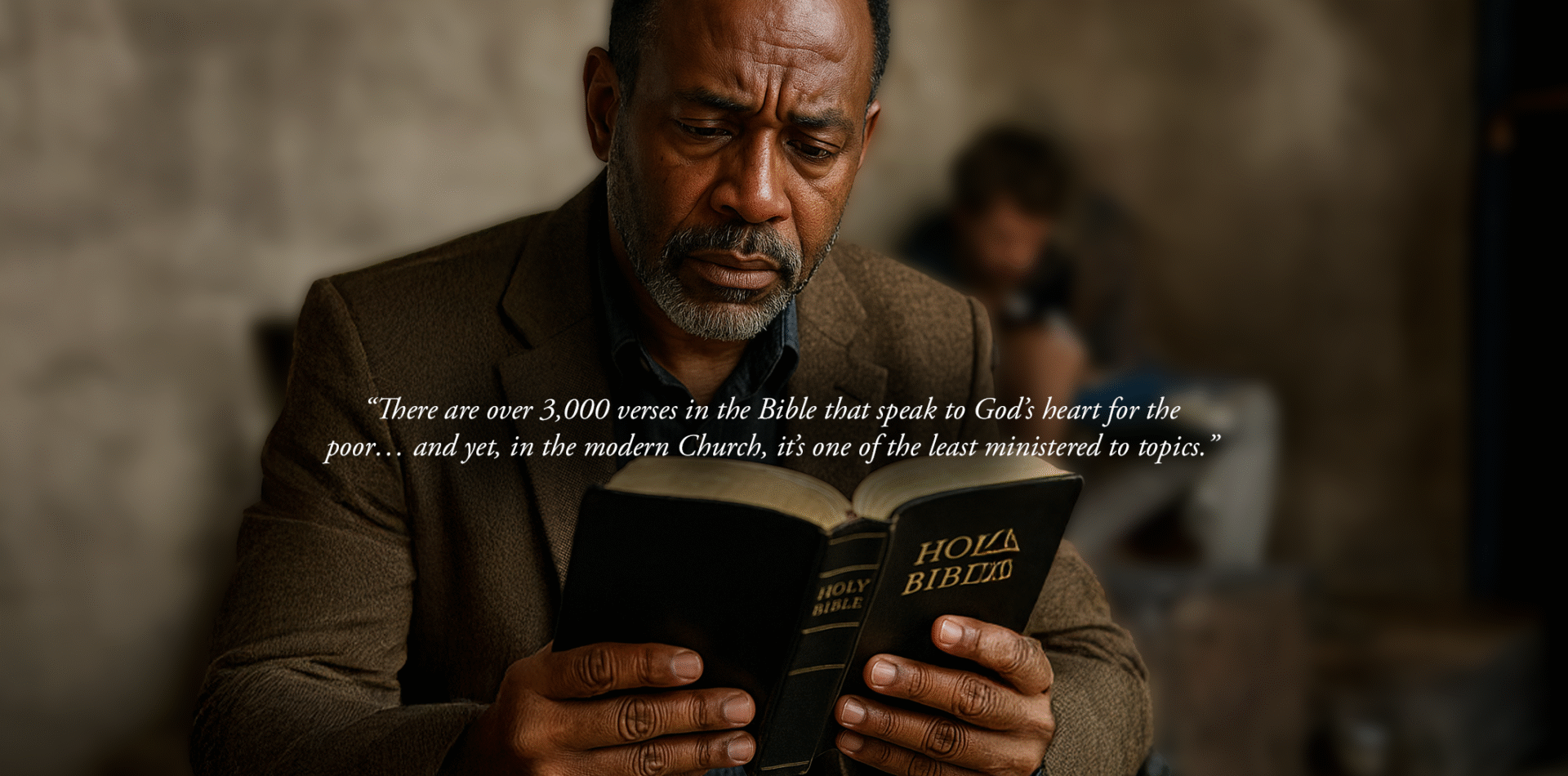
Recently, I came across a heartfelt post by a brother named Mark Anthony Mitchell Sr., who boldly challenged the Church with these words:
“There are over 3,000 verses in the Bible that speak to God’s heart for the poor… and yet, in the modern Church, it’s one of the least ministered to topics.”
He goes on to say that justice for the poor is the second most talked about issue in the Bible, after money. His tone is passionate. His intent, I believe, is pure. And much of his concern is warranted.
But in the pursuit of justice, it is wisdom that teaches us to hold truth in tension. Not every verse that speaks of the “poor” speaks of virtue. And not every call to “justice” implies inequality in provision. Sometimes, wisdom says, “Slow down. Search the Scriptures again.”
That’s what this article is about: How wisdom helps us embrace God’s full counsel, especially on topics like money, justice, and the poor.
Correction with Compassion: A word study of the KJV (our preferred source for consistency) yields approximately 613 verses that mention terms like poor, needy, widow, fatherless, oppressed, destitute, alien, stranger, lowly, beggar, poverty, naked, foreigner, stranger etc. That’s a far cry from 3,000.
But here’s the key: **God’s care for the poor is clear, repeated, and weighty** even if not counted in the thousands :). But we must not exaggerate, or we risk building theology on emotional momentum rather than sound exegesis.
While money is indeed frequently addressed (especially in Proverbs, Ecclesiastes, the Gospels, and the Epistles), “the poor” are not the second most referenced subject in Scripture. Topics such as God (6,000+), Law (2,000+). Music (3,000+), and Sin (900+) far more frequently.
What the Bible actually says is that the poor matter to God – and so does how they became poor. Sadly, sometimes families pay today for things their forefathers did in the past.
The Bible doesn’t ignore generational patterns—it exposes them. In many cases, children and grandchildren inherit the consequences of choices made by their forefathers (Exodus 20:5; Lamentations 5:7; Jeremiah 32:18). Whether through cycles of debt, broken homes, or a rejection of God’s commands, the effects ripple forward (Proverbs 13:22). This doesn’t mean we stop caring. It means we care wisely. Compassion must walk hand-in-hand with understanding – so we don’t just relieve poverty, but help break the chains that caused it.
The Scriptures clearly show that poverty can result from oppression, calamity, or injustice – whether through corrupt systems, natural disaster, war, or the exploitation of the weak by the powerful (cf. Proverbs 13:23; Ecclesiastes 5:8; Amos 2:6–7). Yet, they also warn that poverty can be the fruit of personal folly, laziness, or rebellion against God or Wisdom.
But as we’ve already seen, Scripture doesn’t stop at societal causes. It also exposes the personal ones. Not all poverty is the result of injustice — some of it is the predictable result of unwise choices. Here are 5 Proverbs that tell the other side of the story:
“He becometh poor that dealeth with a slack hand: but the hand of the diligent maketh rich.”
Poverty can result from laziness or neglect. A slack hand leads to lack. Wisdom calls for diligence.
“Yet a little sleep, a little slumber, a little folding of the hands to sleep: So shall thy poverty come as one that travelleth, and thy want as an armed man.”
Poverty doesn’t always arrive suddenly. It creeps in through small, repeated compromises.
“Poverty and shame shall be to him that refuseth instruction: but he that regardeth reproof shall be honoured.”
Ignoring correction and instruction leads to shame and lack. This is not systemic — it’s personal responsibility.
“He that loveth pleasure shall be a poor man: he that loveth wine and oil shall not be rich.”
A life of indulgence leads to impoverishment. This is wisdom’s rebuke to the self-centered consumer mindset.
“For the drunkard and the glutton shall come to poverty: and drowsiness shall clothe a man with rags.”
Overindulgence in food, drink, or sleep are moral and spiritual issues that have material consequences.
In Matthew 26:11, Jesus says:
“For ye have the poor always with you; but me ye have not always.”
This was not apathy. It was perspective. Jesus was quoting Deuteronomy 15:11—reminding His audience that poverty will always exist, but worship and obedience must prioritize His presence.
This verse rebukes the modern notion that the Church can eliminate poverty with social activism alone. Jesus was not a Marxist or a materialist. He was the Messiah, and He taught us to meet physical needs as a fruit of spiritual wisdom, not as the full mission of the Gospel.
Yes, God cares for the poor. But wisdom says:
The heart behind Mark’s post is admirable. He wants to see the Church return to the mission of justice, mercy, and care for the hurting. To this I say, AMEN!!! In many ways, he’s right: far too many churches have lost sight of the hurting in their pursuit of comfort, crowds, and consumer Christianity.
But passion must be guided by precision.
The Bible does not give us a one-sided view of poverty. It doesn’t paint all poor people as victims—nor does it view all wealthy people as villains. Instead, Scripture offers something deeper: wisdom.
Wisdom teaches that poverty can come through injustice—or through idleness.
That some are in need because of what’s been taken from them — while others are in need because of what they’ve wasted.
That God loves the poor — but He also rebukes the lazy, the indulgent, and the irresponsible.
Jesus Himself said, “The poor you will always have with you.” He wasn’t excusing indifference—He was exposing how easily we misunderstand the mission. Our task is not to eliminate poverty, but to respond to it rightly—by being generous, discerning, and wise.
At Proverbs 12X, we believe wisdom is the missing piece. It helps us hold tension — between justice and judgment, between compassion and correction, between giving freely and living responsibly.
We don’t need a social gospel.
We need the whole gospel — rooted in truth, informed by wisdom, and filled with mercy.
Let’s not shout over Isaiah 58.
But let’s not ignore Proverbs 6 either.
Let’s love the poor, teach the simple, confront the foolish, and glorify the Lord — by walking wisely in all things.
Brother Mark’s post stirred a conversation we need. But zeal must be tempered with knowledge (Romans 10:2). The Church cannot afford to embrace partial truths, even when they sound righteous.
The Gospel does care for the poor — but it also corrects the lazy. It uplifts the oppressed — but also disciplines the unruly. It commands justice—but not at the expense of personal wisdom, stewardship, and transformation.
This is why we created Proverbs 12X: to help believers master life, business, and relationships—not by slogans or statistics, but by the timeless wisdom of God’s Word.
If you want to study further how God views the poo — and how to rightly respond — consider joining our community or reading through Proverbs 12 times this year.
Let’s not shout over Isaiah 58. But let’s not forget Proverbs 6, either.
Read the original post by Mark Anthony Mitchell Sr. here
Join the Proverbs 12X Community to keep growing in wisdom.
Last modified: June 11, 2025
Welcome to The Proverbs 12X Advantage Where Timeless Wisdom Becomes

By Sean Isaacs – The Wisdom Coach Introduction: When Compassion
 When Helping Hurts: The Shocking Truth About What… June 9, 2025 Welcome to The Proverbs 12X Advantage June 27, 2025
  Social Media Theology: Why It’s Not Enough—and Can… June 8, 2025
  How Proverbs Equips You to Multiply Without Compromise May 25, 2025
  What Should Black Christians Do on the Fourth of July? July 11, 2025
  Meditation, Contemplation, Revelation: The Forgotten… June 8, 2025
  What’s Wrong With Christian Parenting? The Hidden… June 27, 2025
  The First Domain You Must Conquer May 25, 2025
  Truth in Tension: Wisdom, Wealth, and the Poor June 9, 2025
  If You Don’t Let It BREAK You! You Will Get the… June 8, 2025